
Pandagoo Spreadsheet Headroom: unbranded finds sorted onto four price floors
Tell us what you can spend in total and we work backwards: freight first, then the handling charge on both payments, and whatever is left is the sticker price you can afford.
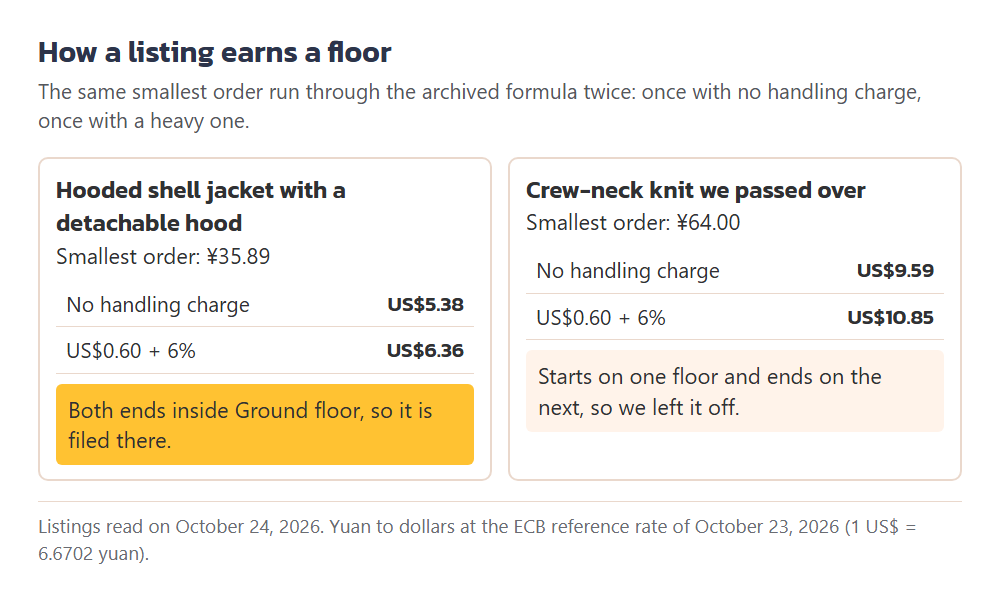
Pandagoo status, October 24, 2026: www.pandagoo.com did not load on our check (Cloudflare error 522). Everything here about Pandagoo comes from its pages as archived on March 8, 2026.
Floors in this building
- G
Ground floorUS$0 to US$10 at checkout
- 1
First floorUS$10 to US$20 at checkout
- 2
Second floorUS$20 to US$35 at checkout
- T
Top floorUS$35 to US$70 at checkout
A floor is the first payment for the smallest order a seller will take.
Category tiles, shuffled so price stays the guide
These eight tiles open the wider product catalogue for each kind of thing. The order is mixed on purpose: on this site the useful question is how much, not which aisle. All sixteen tiles and the four floors sit on the Spreadsheet page.
 JerseysPlain kits to print or leave blank
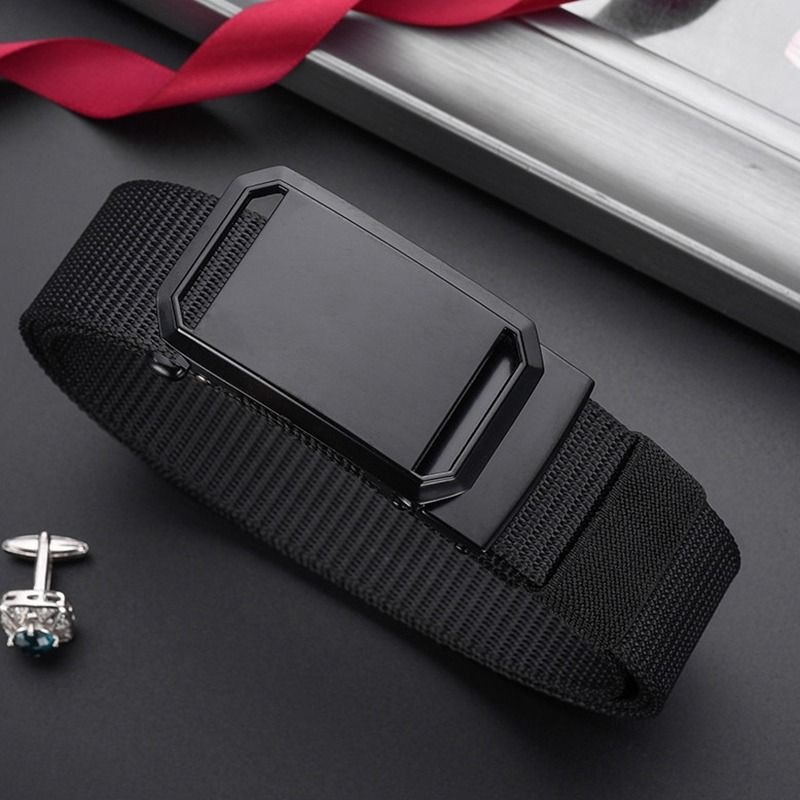 BeltsWebbing, split leather and full hide
 Coats and shellsShells, down and leather, by weight
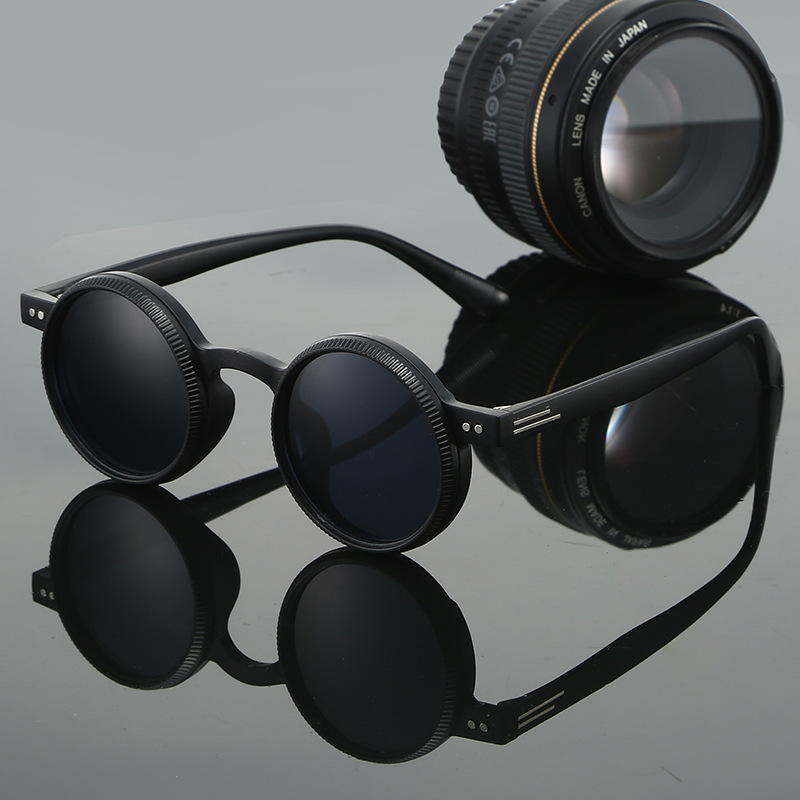 EyewearSun lenses and titanium frames
 PerfumeScents need a liquids-capable line
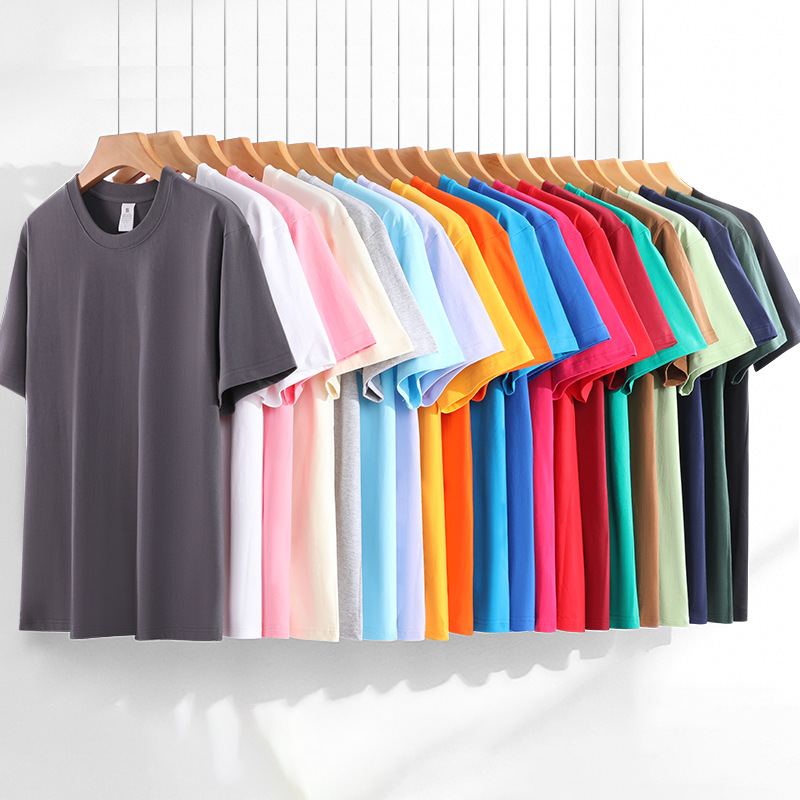 TeesCotton weight printed on the label
 WatchesQuartz faces on straps and bracelets
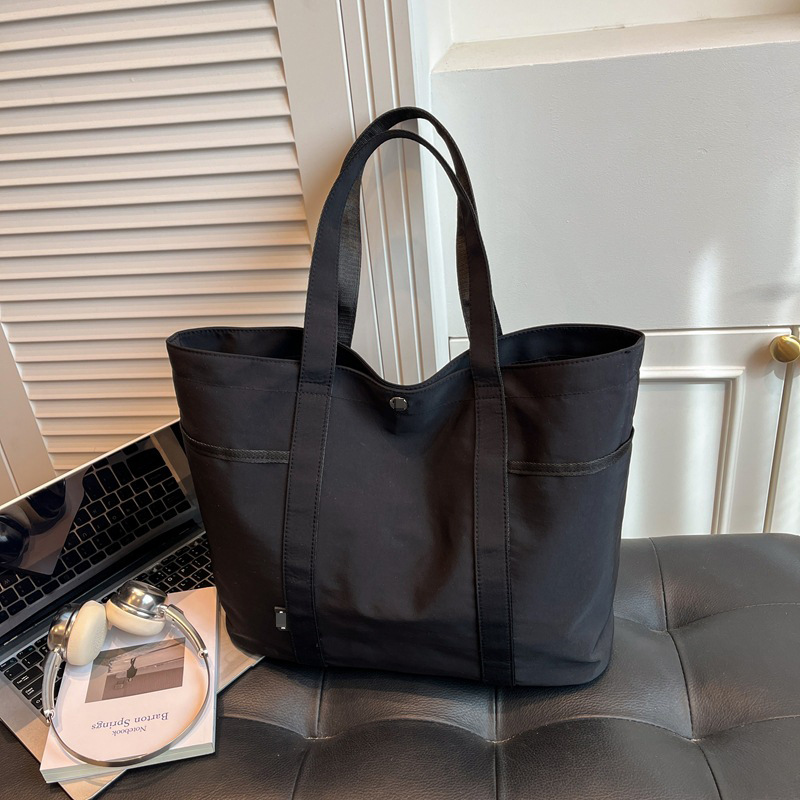 BagsTotes, roll-tops and cowhide
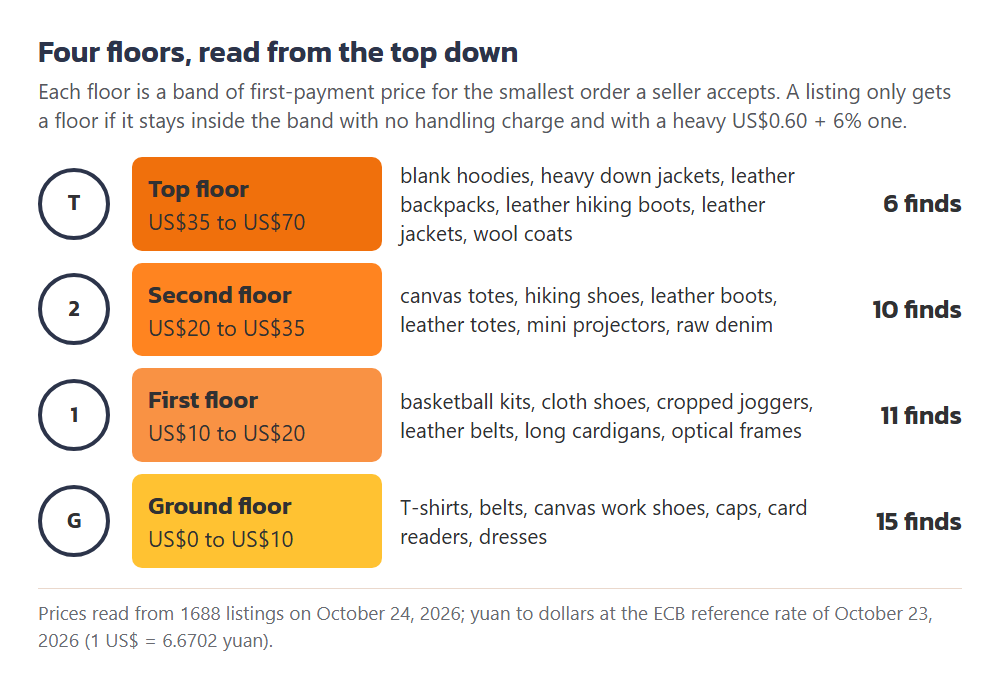
Four floors, each one a band of checkout price
Every find here is filed by one number: what the first payment would be for the smallest order the seller accepts. That is the sticker multiplied by the starting quantity, plus the seller's postage to the warehouse, passed through the payment formula Pandagoo printed on its checkout page. International freight is kept out of the floors on purpose, because it depends on where you live and how many things share a box. The Headroom finder adds it back for your own address.
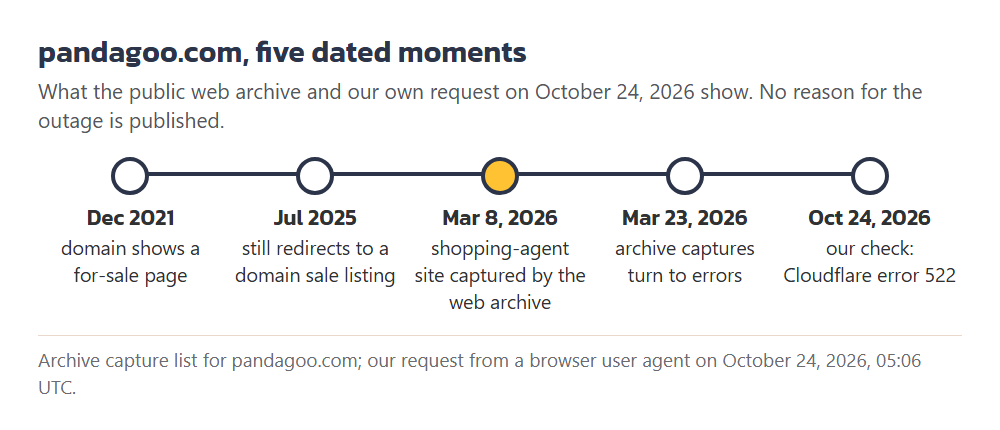
A listing only earns a floor if it stays inside the band at both ends of the handling charge: zero, and a heavy US$0.60 plus 6 per cent. Anything that would jump floors depending on the charge was left off, so a floor does not move when you learn the real fee.
Ground floor
US$0 to US$10, 15 finds
Belts, studs, caps, a card reader sold ten at a time, plain tees and a training kit.
First floor
US$10 to US$20, 11 finds
Zip hoodies, a reversible basketball kit, a shell jacket, cloth shoes and a backpack sold in threes.
Second floor
US$20 to US$35, 10 finds
Cowhide boots, a raw selvedge pair of jeans, a mini projector, long coats and a canvas tote bought in threes.
Top floor
US$35 to US$70, 6 finds
A leather jacket, a crazy-horse leather backpack, heavy down and grey wool coats, hiking boots, and a blank hoodie sold in fives.
Work out the item budget after reserving freight
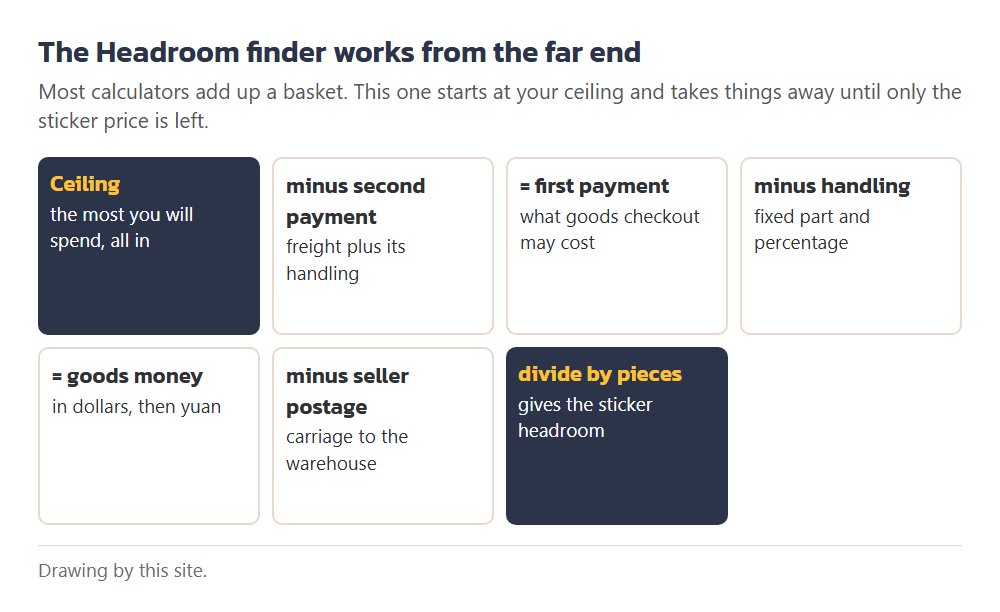
Most price tools add things up: sticker, fee, postage, total. The Headroom finder runs the other way. You give it a ceiling, a country, how many pieces and roughly what they weigh. It holds back the freight to that country, removes the handling charge from both payments, converts what is left into yuan, takes off the seller postage and divides by the number of pieces. The answer is a sticker price: the most each piece can cost on the listing.
Compare the “Cheapest quoted line” and “Middle of the quoted lines” settings, then check the piece count and weight assumption. If a small change makes the basket exceed your cap, reduce it before payment. These saved freight inputs come from another agent: the result is a planning limit, not a Pandagoo offer.
It also lights up the floors that price can reach, and if you already have a listing in mind it counts how many of that piece fit under the same ceiling. Every assumption is a field you can change, including the handling charge, since Pandagoo's archived checkout never kept the numbers.
What this Spreadsheet means by your product budget
What is a Pandagoo spreadsheet? On this site it means a product catalogue of finds you can buy through a shopping agent such as Pandagoo: each card names a real 1688 listing, its photo, its first price tier and the quantity that tier starts at. You browse by category or, more usefully here, by floor. It is not a document of rows; it is a shop window that tells you what a thing costs before an agent ever touches it.
The catalogue helps you identify a listing and its minimum purchase. The agent would collect payment and arrange the parcel. Neither the product card nor our budget finder reserves stock or fixes a delivered price; check which inputs are assumptions before deciding what you can afford.
We picked 42 unbranded finds on October 24, 2026, opened every photo and every option menu, and wrote down what we saw: colour menus that are really fabric grades, a belt that only sells in tens, a jacket whose English size chart reads pounds while the Chinese chart reads jin. Those details move the price you pay, which is why they are on the cards.
Pandagoo itself, and why its site gets a dated note
What is Pandagoo? Going by its archived pages, it was a shopping agent: you pasted a Taobao, Weidian or 1688 link, it bought the item, photographed it in a warehouse in China, stored it, packed it with your other orders and shipped it abroad. The checkout used a two-part handling charge, a fixed US$ amount plus a percentage, and the pages promised no purchasing service fee and free storage for 300 days.
On October 24, 2026 the site did not load for us: pandagoo.com redirects to www.pandagoo.com, which answered with Cloudflare error 522. We do not know why and we do not guess. So you will find neither a sign-up button nor a Pandagoo link here; the search box and the category tiles still work, and the Pandagoo page keeps the dated record.
Nine landings between your ceiling and the doormat
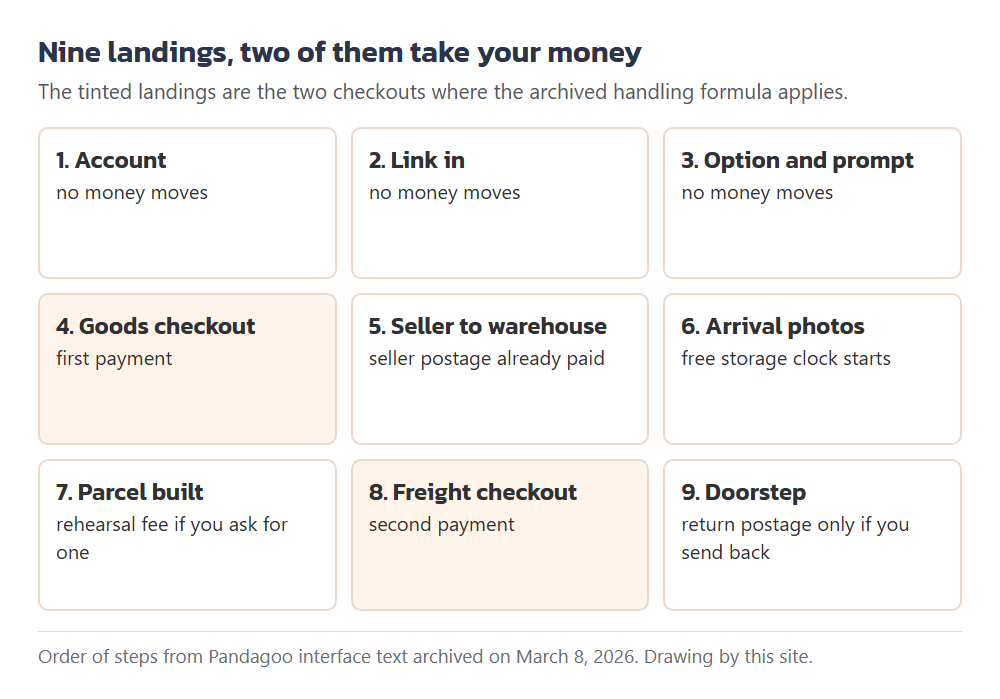
An agent order passes nine landings, from signing up to opening the box. Seven of them cost nothing on the day. Two take money: the goods checkout and the freight checkout, weeks apart. A budget that only looks at the first one runs out at the second, which is the most common way a careful plan goes over. The ordering guide walks each landing with what you see on screen and what it does to your ceiling.
The seven gaps between a sticker and your ceiling
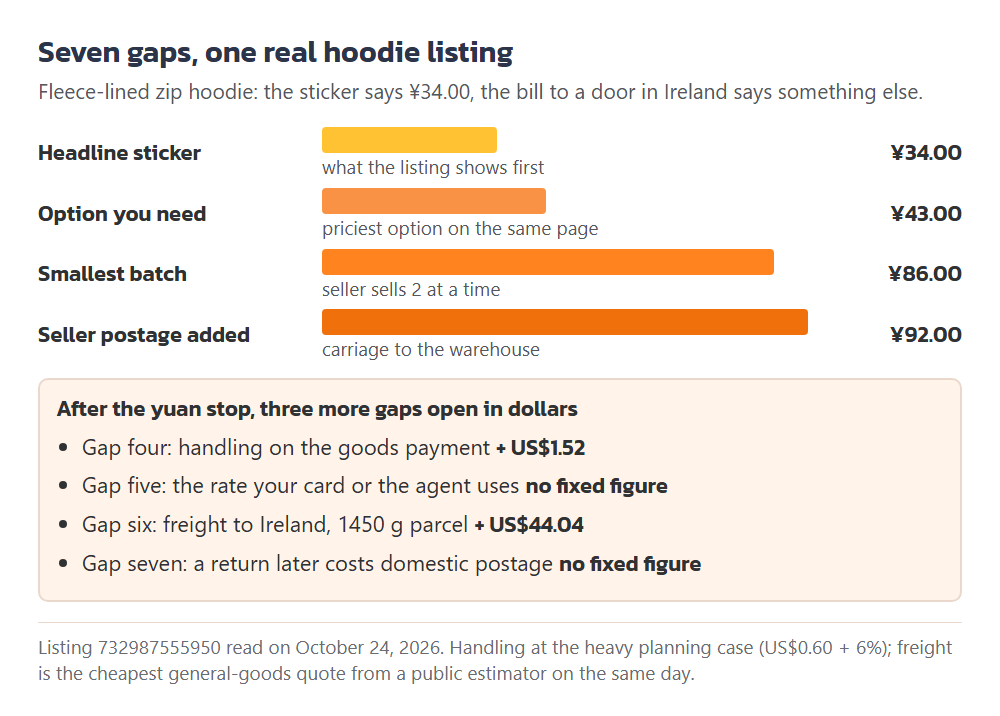
Between the price on a listing and the total on your card there are seven gaps. Four open in yuan, before the agent adds anything: the option you actually want, the smallest batch, and the seller's postage, then the handling charge on the goods payment. Three open later in dollars: the exchange rate, the freight, and the cost of sending something back. The chart follows one real zip hoodie through the first four.
None of these gaps is a trick. Each is printed somewhere, on the listing, the checkout or the freight quote, and each has its own section on the price method page, the listings page and the parcels page.
Prices you can budget against, not just compare
Plenty of finds lists give a price. Few tell you the quantity it starts at, what the option you want costs, or what reaches your door. We built the cards around those three things because they decide whether something fits a budget. Each card also carries the listing number, so you can check that it is the same listing next month.
What we cannot give you is Pandagoo's own fee numbers or line prices; the archive never held them. Where a number is ours, an assumption or a quote from somewhere else, the page says so next to it.
- Prices and stock read on October 24, 2026; we recheck and date every change on the changes page.
- Freight comes from a public estimator run by another agent, dated, for ten countries.
- Yuan become dollars at the European Central Bank reference rate, also dated.
Reading room: photos, sellers, freight and plain answers
The rest of the site is general knowledge, filed by what it does to the bill.
- Arrival photos, parcels and freight: reading warehouse photos while a fix is still cheap, size weight, declared value.
- Agents, sellers and listings: option menus, batch sizes, sellers who move costs onto you, and trusting an agent with a capped sum.
- Help desk: what to do when an order goes over, a priced word list, frequently asked questions and a test for any spreadsheet site.
- Pandagoo: the archive, the outage, and other agents sorted by where their charge hides.
Recent changes to the floors
- October 24, 2026: first edition. 42 finds on four floors; freight for ten countries; reference rate of October 23, 2026.
- October 24, 2026: Pandagoo site checked, Cloudflare error 522.
Every dated change is kept in one place.